Welcome to Oxford University’s MSt in Creative Writing blog, a resource for Oxford events, calls for submission, competitions, news and interviews where you can keep in touch with our community of tutors and alumni.
MSt alumna Mariah Whelan’s “the love i do to you” will be launched by Eyewear Books on 26 November 2019.
From the announcement:
“In this genre-bending debut Mariah Whelan tells the love story of ‘He’ and ‘She’. Once lovers and now… something else, in this collection of sonnets the poems roam across the UK, Europe, Japan and South Korea to explore the oldest of lyric subjects – love, desire, friendship and betrayal. Painful, playful and sensual, these poems explore the bonds that tie lovers and friends together in a collection of startling formal energy and emotional candour.
Mariah Whelan is a poet from Oxford. Her poems appear in The
Aesthetica Creative Writing Annual 2019, Best New British and Irish
Poets 2018, The Poetry Book Society website, The
Interpreter’s House and elsewhere. Her writing has been shortlisted for
The Bridport Prize, The Melita Hume Prize and has won The AM Heath
Prize. Mariah has degrees from Queen’s University Belfast and The
University of Oxford, and she currently holds a PhD research scholarship
at The University of Manchester where she is writing a new
collection of poems and researching trauma and representation in
contemporary Irish fiction.
The admirable achievement of Mariah Whelan’s the love i do to you lies not just in its page-turning fusion of lyrical poetics and dramatic narration, but in the moving power of its steady and intimate candour. Whelan’stransformative sense of scene – ‘your words like trolleys / half-submerged in the river-clay and weeds’ – is never less than compelling, its psychological alertness quietly propulsive from start to finish. — Jane Draycott”
MSt alumna Sarvat Hasin has been awarded the Mo Siewcharran Prize for unpublished authors from BAME backgrounds.
From the announcement:
“Sarvat Hasin has won the inaugural Mo Siewcharran Prize for unpublished authors from BAME backgrounds, securing a deal with Dialogue Books.
The award, named in memory of Nielsen Book’s director of marketing and communications, was announced at Hachette UK’s Carmelite House offices on Monday evening (4th November).
Hasin, a former PR worker for Hachette Children’s Books who now works for the Almedia Theatre, also won £2,500 and will see her debut novel The Giant Dark published in 2021.
She said: “Thank you very much to Dialogue Books because I think this prize is incredible and I think it’s doing something that’s really important in the industry and more than a lot of the conversations that I think are happening at a lot of publishing houses that are maybe more box-ticking. I think what Dialogue is doing is literally putting their money where their mouth is and that’s really important.”
Congratulating the other shortlisted authors, she thanked those who had supported her. She said: “Writing a book, particularly before you have a publishing contract or any idea of how to write a book can be a devastatingly lonely thing and the best thing you can have is people who support you and who believe in you.”
Alien, Go Home by Temitope Owolabi was named second runner-up, winning £1,500, while Suparna Mansions by Vasundra Tailor finished third. The works were chosen from around 185 submissions, whittled down to an eight-strong shortlist who each got a bag of Dialogue books and a copy of On Writing by Stephen King (Hodder).
The winners were judged by a panel featuring Candice Carty-Williams, Guy Gunaratne, Curtis Brown agent Catherine Cho, Dialogue publisher Sharmaine Lovegrove and Viki Cheung, co-chair of THRIVE.”
MSt alumna Maya Popa’s debut poetry collection American Faith has been published by Sarabande Books. You can view and buy it here.
From the announcement:
Runner-Up of the Kathryn A. Morton Prize in Poetry.
The ultimate subject of Maya C. Popa’s stunning debut collection is violence. American Faith begins with its manifestation in our country: a destructive administration, a history of cruelty and extermination, and a love of firearms. The violence naturally extends to the personal. What for some is routine can feel like an assault: a TSA agent wipes down a bra tucked in a traveler’s suitcase, adding, “…prettiest terrorist I’ve seen all day.” Tentatively, the title poem casts light on the unrevealed future, a solution that includes faith: “…the days, impatient, fresh beasts, appeal to me—/ You are here. You must believe in something.” Praise for the collection, from the announcement:
PRAISE FOR AMERICAN FAITH:
“These carefully tuned poems dramatize a classical sensibility shaken awake by the ceaseless shock waves of Trump’s America, where ‘The season turns over/ with perfect indifference,’ and even ‘The Bees,’ as the title of one prose poem claims, ‘Have Been Cancelled.’ How, the poems wonder, can one come to terms with the realities of this dark moment but through understated irony: ‘The principle of the gun law is that anyone/ should have the right to buy what may kill/ a room full of people—this failure is freedom.// I’m sorry there can’t be more poetry in this.’ . . . Popa’s questing and questioning lyric poems are kind company amid the uncertainty of the modern world.” —Publishers Weekly, starred review
“American Faith announces Popa as a debut poet whose compassion, intellect, febrile imagination, and sharp ingenuity set a new standard of literary radiance. It is wholly astonishing to read this artist (part heart-diviner, part brain surgeon) harkening her ancestors and making this poetry of witness, this powerful song of loss and rage and wonder and survival. That survival (‘memory, you crooked thing/I do to the page’) is musical, historical, epic and lyric (Popa’s work inhabits at least seven of the muses’ realms) and gives voice to what didn’t make it: a childhood tragedy, shadows of abuse and violence, the destruction of a child or a family or a species. The book is a world-traveling, time-leaping historical document, each poem a pin on the map of its self-interrogating, wildly hopeful journey to the center of a longed-for spiritual justice.” —Brenda Shaughnessy, author of The Octopus Museum
“In these striking, memorable pages we are reminded that violence, both public and private, is part of what it means to live in America today: ‘A boy with a cricket rifle / kills his sister in Kentucky. / No teacher can show him / how to live with it.’ Another poem announces, ‘The government has been canceled.’ The dictator ‘drapes a medal over his shadow / then extradites the dead from purgatory.’ There are guns everywhere, in a variety of colors— ‘pink for girls to shoot squirrels.’ Even love misses ‘a shot for someone cute.’ At the same time, American Faith appeals to the senses with its strange and beautiful song. How does Popa do this? How does she find that that keyhole, through which the ordinary becomes poetry, becomes a terrifying and unsettling lyric hymn?” —Ilya Kaminsky, author of Deaf Republic and Dancing in Odessa
“Maya C. Popa’s clear-eyed lyrics register with steady power a spectrum of 21st century violences as ‘losses gracelessly accrue/without logic or pattern’ and ‘even the anchor/reading from a teleprompter/is surprised by what he has just had to say.’ In poems that take on the devastating pressure of climate change, gun violence, and our threatened democracy, Popa uses her gift ‘to anguish/and ascribe a language’ to what has been lost—to grieve and in grieving forge song. Revelatory yet emphatically unsentimental, Popa’s unflinching distillations illuminate the facets of our broken world; there is much wisdom here, and grace, and heart. American Faith is a fierce and brilliant debut.” —Deborah Landau, author of Soft Targets
“Maya C. Popa’s poems move with a confident, quick-as-dread sweep toward an alarmingly clear articulation of what it is to be an American ‘under/ duress by a language, its failure to imagine the present world or next…’ Her lyrics address our huge unknowns, when ‘The government is cancelled/ but not the body,’ tides of unsorted information threaten to sink us, and in the poisoned sea ‘the shame is that the parrotfish/cannot be remade from scratch.’ American Faith marries a richly detailed music to this careening hour.” —Mark Doty, author of Deep Lane
MSt poetry tutor Jenny Lewis will be introducing Professors Andrew George and Michael Schmidt at ‘Being Human’ event, SOAS, London University, 19 November, 2019
“The Epic of Gilgamesh is a 4,000-year-old Babylonian poem about a hero in quest of immortality. Preserved on clay tablets, it is the earliest great work of literature to survive from the ancient world. In this popular lecture author and translator Andrew George explores four themes related to this masterpiece: the archaeology of the poem’s recovery, the reconstruction of its text, the story it tells, and its messages about life and death.
The lecture will be introduced by poet Jenny Lewis. Afterwards the author Michael Schmidt will launch his new book, Gilgamesh: the Life of a Poem. At
the end of the evening there will be an opportunity to buy signed
copies of Michael Schmidt’s book and Andrew George’s Penguin translation
of the Epic of Gilgamesh.
“This event is part of the Being Human festival, the UK’s only national festival of the humanities, taking place 14-23 November and led by the School of Advanced Study, University of London, in partnership with the Arts & Humanities Research Council and the British Academy. For further information please see beinghumanfestival.org“
MSt tutor Jenny Lewis will be discussing her poetry with Professor Jem Poster and Oxford poet Sue Leigh at the Oxford Literary Festival on Sunday 7 April, 12.00-1.00pm, St Cross College. From the announcement:
“Oxfordshire poets Jenny Lewis and Sue Leigh discuss their writing and its sources.
Lewis and Leigh have been working recently at opposite ends of the scale – Lewis on a vigorous version of the epic of Gilgamesh and Leigh on a collection of finely worked lyric poems – but they share a vision of the poet’s art as vocation and of the cultural importance of poetry itself.
Lewis is an Anglo-Welsh poet and playwright who teaches poetry at the University of Oxford. Her recent publications are Gilgamesh Retold, Fathom and Taking Mesopotamia. Leigh is a poet and writer based in Oxfordshire’s Windrush Valley. She teaches creative writing at the University of Oxford’s Department of Continuing Education. Her latest work is Chosen Hill.
Here they talk to poet, novelist and festival director of academic programmes Professor Jem Poster.”
MSt tutor Jenny Lewis and poet Michael Schmidt at two events in Oxford on 27 Feb 2019 2.00-3.00pm Ashmolean Museum, Oxford Gilgamesh the Escapologist – on the instability of texts and translations – https://www.ashmolean.org/event/gilgamesh-the-escapologist
5.30-6.30pm Kellogg College, Banbury Road, Oxford Recalibrating the Epic of Gilgamesh for the 21st Century – How can one poem speak in such different voices and authorise such different responses?http://www.kellogg.ox.ac.uk/events/creative-writing-feb19/
Both events are free and there will be refreshments served at Kellogg from 5.00pm onwards.
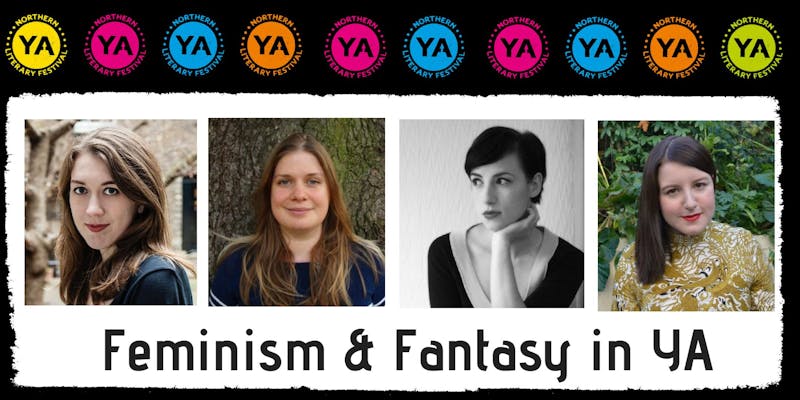
MSt alumna Rose Edwards will be on the Feminism & Fantasy Panel at the NYALitFest, 16 March 2019. The panel, chaired by Melinda Salisbury, also includes Samantha Shannon and Laure Eve.
Sat, 16 March 2019
11:00 – 11:45 GMT
UCLan Greenbank Building Victoria Street, Preston PR1 2HE
MSt tutor Jenny Lewis will be reading at Pembroke College, Oxford on 21st January 2019 at 6 pm.
From the announcement:
“Jenny Lewis is an Arts Council-funded poet, playwright, children’s author, translator and songwriter who teaches poetry at Oxford University. Her first poetry sequence, When I Became an Amazon (Iron Press, 1996), was dramatized, widely toured and broadcast on BBC Woman’s Hour. It was translated into Russian by Natalya Dubrovina and published by Bilingua, Russia in 2002. It was made into an opera with music by Gennadyi Shiroglazov, performed by the Tchaikovsky Opera and Ballet Company in November 2017 and won the 2018 Russian Laureate Prize . Jenny has published four collections of poetry and had seven plays and poetry cycles performed at major UK theatres including the Polka Theatre (for children), the Leicester Haymarket and the Royal Festival Hall. Her recent work includes After Gilgamesh (Pegasus Theatre, 2011; Mulfran Press, 2012), Stories for Survival, a Retelling of the 1001 Arabian Nights (Pegasus Theatre, 2015), Singing for Inanna, a chapbook of poems in English and Arabic with the Iraqi poet, Adnan al-Sayegh (Mulfran Press 2014) and Taking Mesopotamia (Oxford Poets/ Carcanet 2014). Her latest work, Gilgamesh Retold (Carcanet Press 2018), was a New Statesman Book of the Year, a Carcanet Book of the Year and a London Review of Books Book of the Week. Her work has been translated into several languages including Russian, Farsi and Arabic. She is currently completing a Ph.D. on Gilgamesh at Goldsmiths, London University.”